

Anxiety is more than overthinking or feeling nervous. It is a full-body stress response that can affect breathing, heart rate, sleep, digestion, focus, and emotional control. When the brain senses pressure or danger — even emotional stress — the nervous system shifts into fight-or-flight mode, keeping the body tense and alert. What Is EFT Tapping & How Does It Reduce Anxiety?
Emotional Freedom Techniques, commonly known as EFT tapping, is a mind-body technique designed to calm that stress response. It combines gentle tapping on specific pressure points with focused attention on anxious thoughts or emotions, helping the brain and body feel safer, calmer, and more regulated.
EFT Tapping Explained Simply
EFT tapping is often described as a mix of:
- Acupressure
- Mind-body therapy
- Stress regulation
- Emotional processing
Instead of using needles like acupuncture, EFT uses fingertips to tap on certain areas of the face and body.
At the same time, the person focuses on a stressful thought, emotion, or physical feeling.
This combination helps reduce the intensity of anxiety instead of pushing the feeling away.
Why Anxiety Feels So Physical
When the brain senses stress, it activates the body’s fight-or-flight response.
This releases stress hormones like cortisol and adrenaline.
That is why anxiety can cause:
- Tight chest
- Racing thoughts
- Fast heartbeat
- Shallow breathing
- Sweaty palms
- Muscle tension
- Trouble sleeping
The body reacts as if danger is happening right now — even when the stress is emotional rather than physical.
EFT works by helping interrupt that alarm response.
EFT Tapping Explained Simply
1- It Sends a “Safe” Signal to the Brain
Tapping creates gentle physical stimulation on pressure points connected to the nervous system.
This may help calm the amygdala — the part of the brain responsible for fear and threat detection.
As the body relaxes, the brain begins to realise:
“This situation may feel uncomfortable, but I am not in danger.”
This stimulation may also engage the Vagus Nerve, the body’s ‘on-switch’ for relaxation.
2- It May Lower Cortisol Levels
Research on EFT has shown promising effects on cortisol, the body’s main stress hormone.
Some clinical studies reported cortisol reductions of up to 43% after EFT sessions.
Lower cortisol levels are linked to:
- Reduced stress
- Better sleep
- Improved focus
- Less emotional overwhelm
- Better emotional control
3- It Helps the Body Process Emotions
Many people try to stop anxiety by ignoring it or distracting themselves.
EFT takes a different approach.
Instead of avoiding the feeling, the person briefly acknowledges it while calming the body through tapping.
That combination may help reduce emotional intensity faster.
Rewiring the Brain’s Stress Response
EFT is more than a temporary “calm-down” tool; it is a form of neural retraining. By tapping while focusing on a stressor, you are practising extinction signalling. Over time, this teaches the brain that the specific memory or thought no longer requires a “fight-or-flight” reaction. You aren’t just managing anxiety in the moment—you are physically lowering the sensitivity of your internal alarm system.
Why EFT Feels Different From Talking Alone
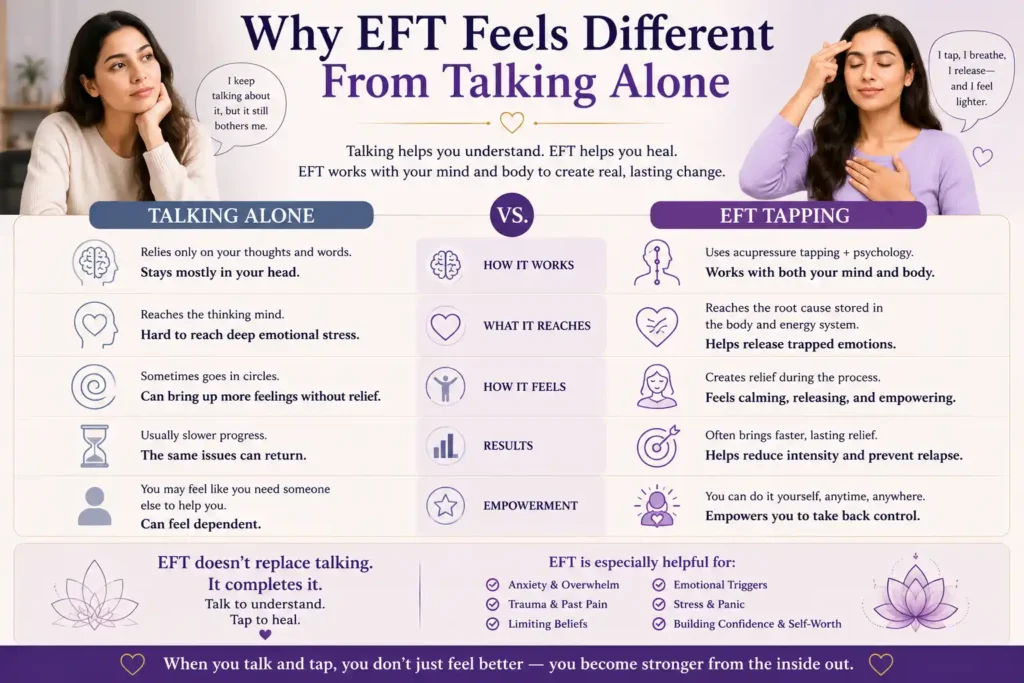
Traditional talk therapy mainly focuses on thoughts and behaviour.
EFT works with both the mind and the body.
Approach | Primary Focus | Nervous System Involvement |
Traditional talk therapy | Thoughts and behavior | Indirect |
EFT tapping | Thoughts + body regulation | Direct |
Awareness and observation | Moderate | |
Breathwork | Physiological calming | Direct |
This is why EFT is often called a somatic or body-based stress technique.
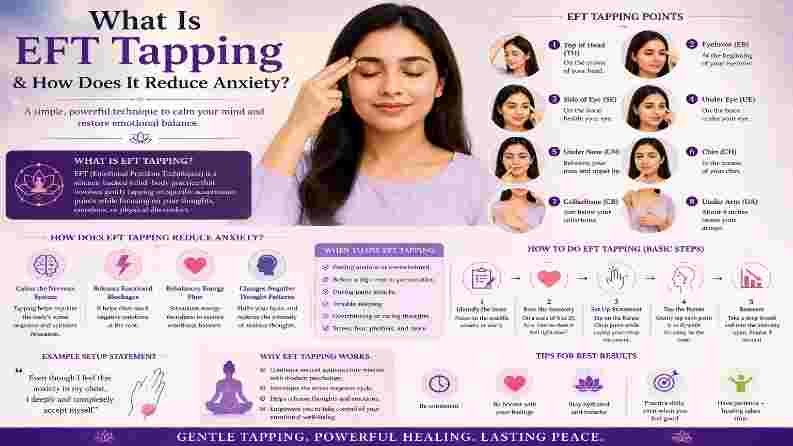
The Main EFT Tapping Points
EFT uses a simple tapping sequence across specific points on the body.
Tapping Point | Location |
Karate Chop Point | Side of the hand |
Eyebrow Point | Beginning of eyebrow |
Side of Eye | Outer corner of eye |
Under Eye | Below the eye |
Under Nose | Between the nose and the lip |
Chin Point | Below the lower lip |
Collarbone Point | Just below the collarbone |
Under Arm | Side of ribcage |
Top of Head | Crown of the head |
Most people tap each point around 5–7 times.
Step-by-Step: How to Do EFT Tapping
1. Identify the Stress
Be specific.
Instead of:
- “I feel anxious.”
Try:
- “I feel anxious about tomorrow’s interview.”
- “I cannot stop overthinking tonight.”
Specific emotions are easier for the brain to process.
2. Rate the Intensity
Give the feeling a number from 0 to 10.
- 0 = completely calm
- 10 = extremely intense
This helps track emotional changes during tapping.
3. Say the Setup Statement
While tapping the side of the hand, repeat a statement like:
“Even though I feel anxious right now, I deeply and completely accept myself.”
This step combines emotional honesty with self-acceptance.
4. Tap Through the Points
Tap gently through each point while repeating a reminder phrase like:
- “This anxiety”
- “This stress”
- “This fear in my chest”
Keep breathing naturally while tapping.
5. Recheck the Intensity
Pause and rate the feeling again.
Many people notice the emotional intensity starts to drop after one or two rounds.
Signs Your Nervous System Is Resetting
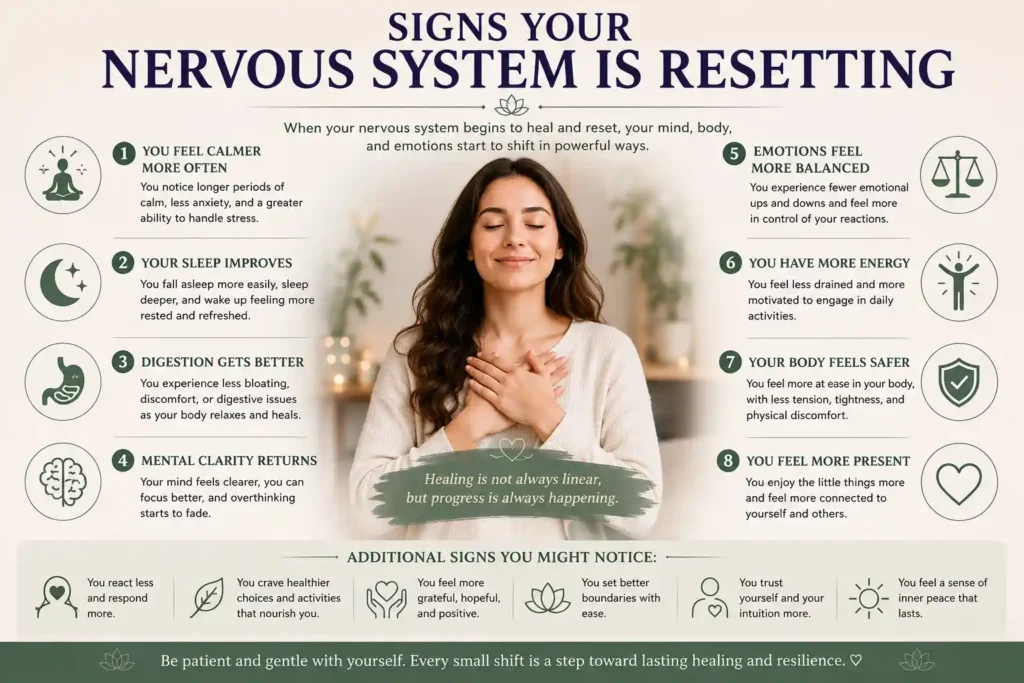
During a session, your body will often provide “release signals” that indicate your nervous system is shifting from a state of high alert to a state of safety. Look for these subtle physical cues:
- A deep, spontaneous sigh: A signal that the diaphragm is relaxing.
- Repeated yawning: Often a sign of the parasympathetic nervous system taking over.
- A sudden drop in shoulder height: Physical release of “bracing” tension.
- Mental clarity: The feeling that the stressful thought is now “further away” or less vivid.
What Happens During EFT?
People often notice physical changes while tapping.
These can include:
- Slower breathing
- Relaxed shoulders
- Feeling lighter
- Reduced chest tightness
- Fewer racing thoughts
- Emotional release
Some people yawn, sigh, or even cry during tapping sessions. These reactions are normal signs that the nervous system is releasing stress.
When People Commonly Use EFT
EFT is often used during high-stress moments, including:
- Before presentations
- Before exams
- During panic spikes
- Before important conversations
- At bedtime for racing thoughts
- During emotional overwhelm
- During stressful workdays
One reason people like EFT is that it can be done almost anywhere without equipment.
Does EFT Actually Work?
Research on EFT is still growing, but many studies show positive results for stress and anxiety reduction.
Researchers believe EFT may help through several combined effects:
- Nervous system calming
- Focused emotional processing
- Exposure therapy principles
- Reduced cortisol
- Controlled breathing
At the same time, experts agree that EFT should not replace professional mental health care for severe anxiety or trauma.
It works best as a supportive stress-regulation tool.
Why EFT Sometimes Doesn’t Feel Effective
EFT works better when the emotional focus is specific and honest.
Common mistakes include:
- Being too vague
- Rushing the tapping
- Avoiding the real emotion
- Expecting instant results
- Tapping without emotional focus
The goal is not to “force positivity.” The goal is to help the body feel safer while processing stress.
The Real Reason EFT Helps Some People
EFT is not about pretending problems do not exist.
It helps because it teaches the nervous system something important:
A stressful thought does not always mean immediate danger.
That shift can reduce the body’s automatic fear response.
For many people, EFT becomes less about “tapping points” and more about learning how to regulate emotions without feeling overwhelmed by them.
Frequently Asked Questions About EFT Tapping
Can EFT tapping work even if someone does not believe in it?
Yes. EFT does not rely entirely on belief because it works through physical stimulation and focused attention. Many people notice calming effects even when they feel sceptical at first.
How long does it usually take to feel calmer after tapping?
Some people feel a shift within a few minutes, while others need multiple rounds or regular practice. The response often depends on how intense or deeply rooted the stress is.
Is it normal to feel emotional during or after EFT?
Yes. Emotions like crying, sighing, or feeling unexpectedly tired can happen as the body releases built-up stress. These reactions are usually temporary and part of emotional processing.
Can EFT tapping be used alongside therapy or medication?
Absolutely. Many people use EFT as a supportive tool alongside counselling, mindfulness practices, or prescribed treatment plans. It is generally used to complement, not replace, professional care.
What is the biggest mistake beginners make with EFT?
The most common mistake is staying too general about the problem. EFT tends to work better when the emotion, memory, or stress trigger is described clearly and specifically.