
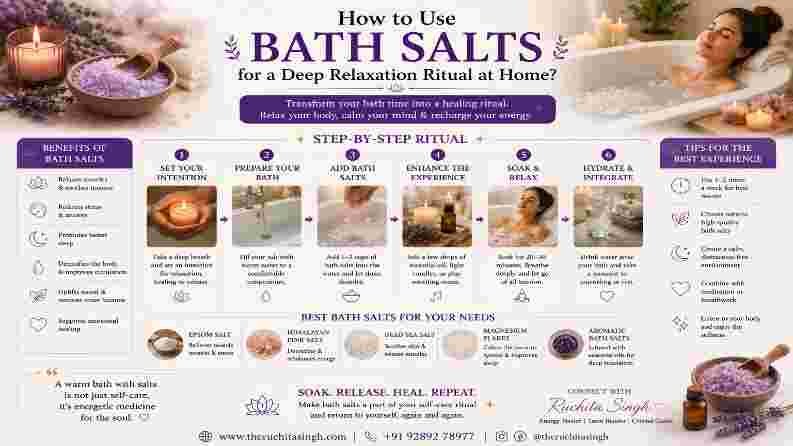
How to Use Bath Salts for a Deep Relaxation, add 1 to 2 cups of bath salts under running warm water, keep the temperature between 37°C and 38°C, and soak for at least 15 to 20 minutes without distractions. The warm water helps relax tight muscles, while mineral-rich salts and calming botanicals like lavender support nervous system relaxation and prepare the body for better sleep.
The way the bath is prepared matters just as much as the bath salts themselves. Water that is too hot can overstimulate the body, while a rushed five-minute soak rarely gives the muscles and mind enough time to properly unwind. A structured bath ritual works best when temperature, soaking time, and post-bath rest all work together.
For anyone exploring herbal bath salts for relaxation, understanding the correct method is what transforms a simple evening bath into a restorative recovery ritual.
Why Bath Salts Help the Body Relax
Warm water naturally helps muscles loosen by increasing circulation and reducing physical tightness. Bath salts enhance that process by adding minerals and calming botanical ingredients that support relaxation on both a physical and sensory level.
Lavender-based bath salts are especially popular in evening rituals because the scent of lavender is strongly associated with calmness and better sleep preparation. Combined with warm water, the aroma helps quiet mental overstimulation while the mineral-rich soak eases body fatigue accumulated throughout the day. A proper bath ritual can help:
- Relax stiff muscles after long sitting hours
- Reduce feelings of physical heaviness and fatigue
- Calm an overactive mind before bed
- Create a smoother transition into sleep
- Encourage a slower breathing pattern and nervous system calmness
The goal is not instant sedation. The body gradually shifts into a more relaxed state when heat, minerals, and sensory calmness work together over time.
Step-by-Step: How to Use Bath Salts Properly for Deep Relaxation
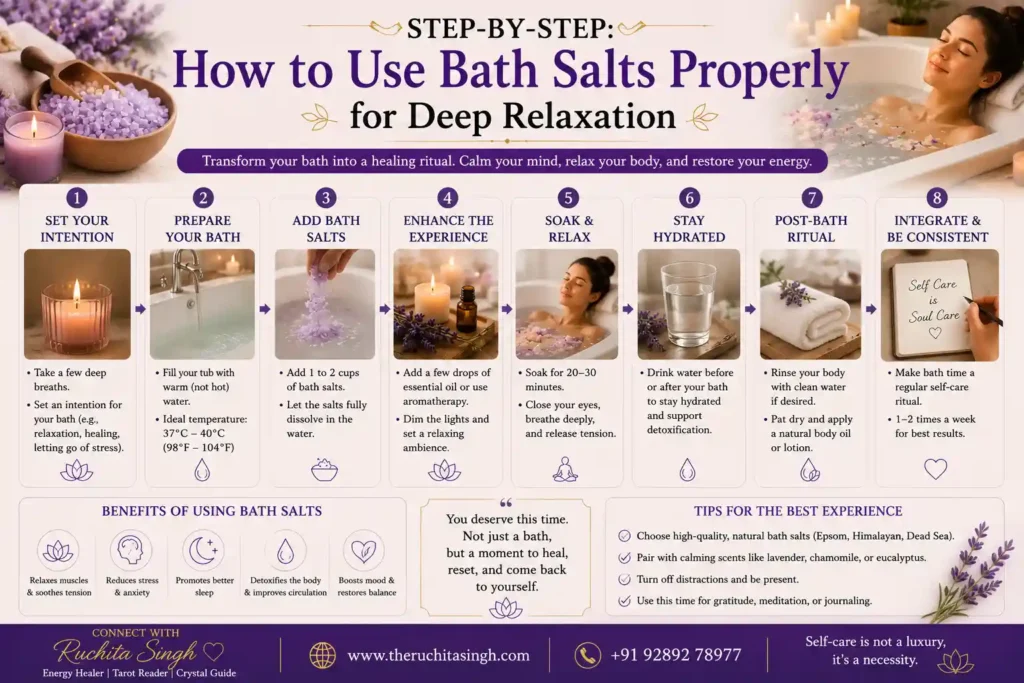
Step 1: Prepare the Space Before the Bath
Most people focus only on the bath itself, but the environment matters just as much. Bright lights, loud sounds, and constant phone notifications keep the brain alert even while the body is trying to relax.
Before filling the tub:
- Dim the bathroom lighting
- Keep your phone away from the bath area
- Place a clean towel and drinking water nearby
- Allow the room to feel quiet and unhurried
This small preparation helps reduce sensory stimulation before the soak even begins.
Step 1: Prepare the Space Before the Bath
One of the biggest mistakes people make is using extremely hot water. While it may feel soothing initially, overheating the body can actually increase heart rate and leave the nervous system overstimulated afterwards.
The ideal bath temperature for relaxation sits between 37°C and 38°C. This range is warm enough to ease muscle tension without making the body feel drained.
Water Temperature Guide
Temperature Range | Effect on the Body |
Below 36°C | May feel lukewarm and less relaxing |
37°C–38°C | Ideal for calming muscles and the nervous system |
Above 39°C | Can overstimulate the body and increase fatigue |
The water should feel comfortably warm, not aggressively hot. A balanced temperature allows the body to settle gradually instead of reacting to heat stress.
Step 3: Add Bath Salts Correctly
Bath salts should always be poured directly under running water rather than into a filled tub. The pressure of the water helps the crystals dissolve evenly while releasing the botanical aroma into the steam. For a standard bathtub:
- Use approximately 1 to 2 cups of bath salts
- Stir the water gently if needed
- Allow the salts to dissolve fully before stepping in
This process distributes the minerals properly throughout the bath instead of leaving concentrated residue at the bottom.
For those searching for bath salts online, India has many commercial options available, but ingredient quality matters. Products made with genuine botanical essences and mineral-rich salts create a noticeably calmer and cleaner experience compared to heavily synthetic formulations.
Step 4: Ease Into the Water Slowly
Stepping too quickly into warm water can shock the body temporarily. Entering gradually allows circulation and breathing to adjust naturally. Once inside the bath:
- Relax your shoulders consciously
- Lean your neck and lower back into the water
- Take slow, steady breaths
- Allow the body a few minutes to settle
The first few minutes are important because this is when physical tension begins softening most noticeably.
Step 5: Stay in the Bath for 15 to 20 Minutes
Timing matters more than most people realise. A rushed five-minute soak rarely gives the body enough time to transition into deeper relaxation.
What Happens During the Soak
Time in Bath | What the Body Experiences |
First 5 Minutes | Body temperature rises gently, and muscles begin loosening |
5–10 Minutes | Circulation improves, and physical tension reduces |
10–20 Minutes | The body settles into deeper calm while minerals and botanicals continue working |
This is why most relaxation-focused bath rituals recommend a full 15 to 20-minute soak.
Avoid scrolling on your phone during this time. Constant screen stimulation prevents the nervous system from fully slowing down. The body relaxes more effectively when the mind is not actively processing notifications, videos, or work-related content.
Step 6: Use Lavender-Based Bath Salts for Evening Recovery
Lavender remains one of the most trusted ingredients in nighttime wellness rituals because of the way its aroma supports calmness and emotional quietness.
Unlike energising fragrances such as citrus or peppermint, lavender creates a softer sensory environment that suits bedtime routines particularly well. This makes it useful for people dealing with:
- Mental fatigue after work
- Restlessness before sleep
- Racing thoughts at night
- Physical exhaustion from long days
- Emotional overstimulation
A well-formulated lavender soak should feel calming without becoming overwhelmingly perfumed.
For a calming evening ritual, The Ruchita Singh’s Lavender Cloud bath salts are thoughtfully crafted with soothing lavender essence and mineral-rich salts to help ease muscle tension, relax an overstimulated mind, and support better sleep preparation. Priced at ₹149.00, the blend is designed for everyday relaxation, body fatigue recovery, and creating a peaceful nighttime self-care routine at home.
Rather than functioning as a heavily fragranced luxury product, it is designed as a practical evening ritual for everyday stress and body fatigue.
Step 7: Transition Properly After the Bath
The post-bath period strongly influences how relaxed the body remains afterwards. Jumping immediately back into screens, work, or loud environments can quickly interrupt the calming effect.
After-Bath Routine for Better Relaxation
Post-Bath Habit | Why It Helps |
Dry off slowly with a warm towel | Maintains the relaxed body temperature |
Drink a glass of water | Helps rehydrate after warm soaking |
Wear loose, breathable clothing | Prevents overheating |
Avoid screens for 20–30 minutes | Keeps the mind calm before bed |
Go to sleep soon after | Supports deeper rest and recovery |
As the body cools naturally after the bath, it receives signals associated with sleep readiness. Preserving that relaxed state often leads to more settled, uninterrupted rest.
Common Mistakes That Reduce the Benefits of Bath Salts
Even high-quality herbal bath salts for relaxation may feel ineffective if the routine itself is rushed or poorly structured.
Mistakes to Avoid
- Using extremely hot water
- Soaking for less than 10 minutes
- Using overly synthetic fragrances
- Staying connected to screens throughout the bath
- Taking baths too late when exhaustion is already overwhelming
- Skipping hydration afterwards
Relaxation works best when the body is given enough uninterrupted time to transition gradually into calmness.
Final Thoughts
A bath ritual becomes significantly more effective when approached as a structured recovery routine instead of a quick self-care trend. The combination of warm water, mineral-rich salts, calming botanicals, and proper soaking time creates conditions where the body can genuinely release accumulated tension.
Small details matter more than expensive setups. Water temperature, soaking duration, mineral quality, and the way the body transitions afterwards all influence the final experience. When done properly, even a simple 20-minute soak can become one of the most restorative parts of an evening routine.
For anyone looking to build a calming nighttime ritual, choosing thoughtfully formulated bath salts and following a consistent soaking process can help transform an ordinary bath into a deeply relaxing recovery experience at home.
Frequently Asked Questions
Can herbal bath salts be used daily to recover from corporate posture stiffness or long commutes?
Bath salts can be used 2–4 times a week for regular relaxation. Daily use is usually fine for most people if the formulation is gentle and the skin does not feel dry or irritated afterwards.
Do bath salts expire over time?
Bath salts generally have a long shelf life, but botanical fragrance and essential oil potency may gradually fade if exposed to moisture or direct sunlight. Always store them in a sealed, dry container.
Can bath salts help after physical workouts or long travel days?
Yes, warm mineral soaks are commonly used to ease post-workout soreness, stiffness from prolonged sitting, and overall body fatigue after travel or physically demanding days.
Is it necessary to rinse off after using bath salts?
A quick rinse is optional. Some people prefer leaving a light mineral layer on the skin for softness, while others rinse lightly if they have sensitive skin or dislike residue.
What should be avoided while using bath salts?
Avoid combining bath salts with extremely hot water, alcohol consumption, or prolonged soaking beyond 30 minutes, as this may leave the body feeling dehydrated or overly fatigued afterwards.